Coming Soon

Project Description
- This project helps conflict-affected communities, IDPs, and civil society organizations take part in humanitarian-development-peace work by improving their capacity and giving them access to emergency aid, education, livelihoods, and peacebuilding support.
- This initiative, focused on gender and ethnic inclusion, links fast humanitarian support with long-term development and peace efforts by providing cash assistance, livelihood recovery, WASH improvements, psychosocial services, youth learning, and stronger community-led peace structures.
- The project is implemented across nine townships in Rakhine State, reaching 149,490 people to date, 52% of them women, and helping vulnerable families build resilience, restore livelihoods, and contribute to social cohesion.
Project Objectives
- Enhance the well-being and dignity of crisis-affected households by providing lifesaving support such as emergency cash assistance, gender-responsive health services, WASH supplies, and expanded access to alternative education, youth learning, and life-skills training.
- Build resilient and inclusive livelihoods for women, persons with disabilities, and marginalized groups through practical skills training, agriculture and livestock recovery, and small-business support that help families rebuild income.
- Promote peaceful coexistence by supporting community dialogues, storytelling, peace ambassadors, Women, Peace & Security engagement, and strengthened civil society capacity for effective HDP programming.
Key Achievements
- Delivered 328 livelihood opportunities across six townships, supporting livestock, agriculture, and small businesses.
- Ensured strong inclusion with 52% women-led and 14% PWD-led livelihood initiatives.
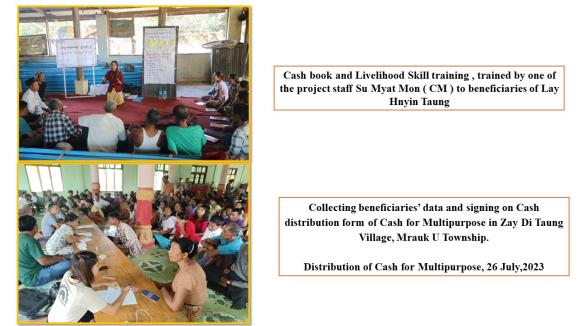
- Support MPCA for urgent needs with long-term livelihood support to rebuild income and food security.
- Achieved 53% female participation across all activities, with high engagement in peace and development sectors.
- Included diverse ethnic groups such as Muslim, Chin, Mro, Chakama, Khame, Maragyi, and Rakhine communities.
- Provided social cohesion activities and MHPSS support to improve community well-being.
- Strengthening community capacity through partner-led training and gender resource development.