About PDI
The Peace and Development Initiative – Kintha
PDI-Kintha was founded in 2013 in response to outbreaks of communal violence in 2012 and the more organized anti-Muslim violence that followed. Initial projects and activities sought to address the deepening religious and ethnic divisions that followed.
Early on, we focused much of our energy on building trust not only between communities affected by conflict but also between community members and our staff. Through sports, music, and art activities we sought to transform attitudes driving conflict, raise awareness of issues underlying the conflict, and build skills to transform conflict.
We work with conflict-affected populations from central and northern areas of Rakhine State; however, following military clearance operations in August 2017 that lead to an exodus of over 600,000 people to Bangladesh and the subsequent barriers to access, we were forced to adjust the geographic focus area of some of our projects. We currently have 40 staff members implementing peacebuilding, education, and social cohesion activities in Sittwe, Buthidaung, Kyauk Taw, and Mrauk-U townships (of central and northern areas of Rakhine State) as of January 2019.
How We Have Grown
We started by working with conflict-affected communities in the central and northern parts of Rakhine State. Over the years, we faced many challenges, including major displacements in 2017 and changing security situations. Every time, we adapted to make sure we could still help the people who needed it most. In 2019, we were a small team of 40 staff members working in Sittwe, Buthidaung, Kyauk Taw, and Mrauk-U. Today, we have grown into a strong team of around 90 staff members. We now run our programs from offices in both Rakhine State, Myanmar, and Thailand.
What We Do: The Triple Nexus Approach
To effectively address the protracted and changing nature of the crises in our operational areas, PDI-Kintha has evolved its programmatic strategy. We structure our current interventions around a comprehensive Triple Nexus framework, ensuring that immediate survival, long-term development, and social cohesion work hand in hand:
1. Social Inclusion & Peacebuilding
In deeply fractured societies, sustainable peace cannot be imposed from outside; it must be cultivated from within. We work at the intersection of intergroup reconciliation and civic development, creating structured spaces where communities divided by ethnicity and religion can engage in meaningful dialogue, share lived experience, and reconstruct social trust. By investing in youth as agents of transformative change, we strengthen the intergeneration foundation of social cohesion.
2. Humanitarian Action
Humanitarian crises burden those already living as internally displaced persons (IDPs), ethnic minorities, women and girls, and persons with disabilities. We operate from a locally anchored, rights-based framework that places human dignity at the center of humanitarian response, integrating protection, psychosocial support, and material assistance to address not only immediate survival needs but also the broader conditions of safety and well-being.
3. Resilience & Development
Resilience, in conflict-affected and under-resourced contexts, is not merely the capacity to withstand shocks; it is the long-term ability of communities to adapt, self-organize, and shape their own trajectories. Through a community-centered development paradigm, we prioritize addressing limited access to education, constrained livelihood support, weakened institutional capacity, and inadequate disaster preparedness by equipping grassroots communities with the knowledge and local mechanisms to anticipate, mitigate, and recover from both conflict and natural hazards, building resilience from within toward sustainable futures.

Mission
To educate a generation of youth peacebuilders in Rakhine State, to support diverse communities to collaborate with one another, and to promote the value of representation in decision making at all levels.

Vision
To normalize collaboration between communities in conflict in Rakhine State and for all communities to benefit from access to fair opportunities.

Value
Diversity, Justice, Accountability, Collaboration, Human Dignity, Sustainability
Goals

There is increased social harmony amongst communities affected by conflict.

Diverse and marginalized people have greater access to opportunity.

There is increased momentum for peace in Rakhine State.
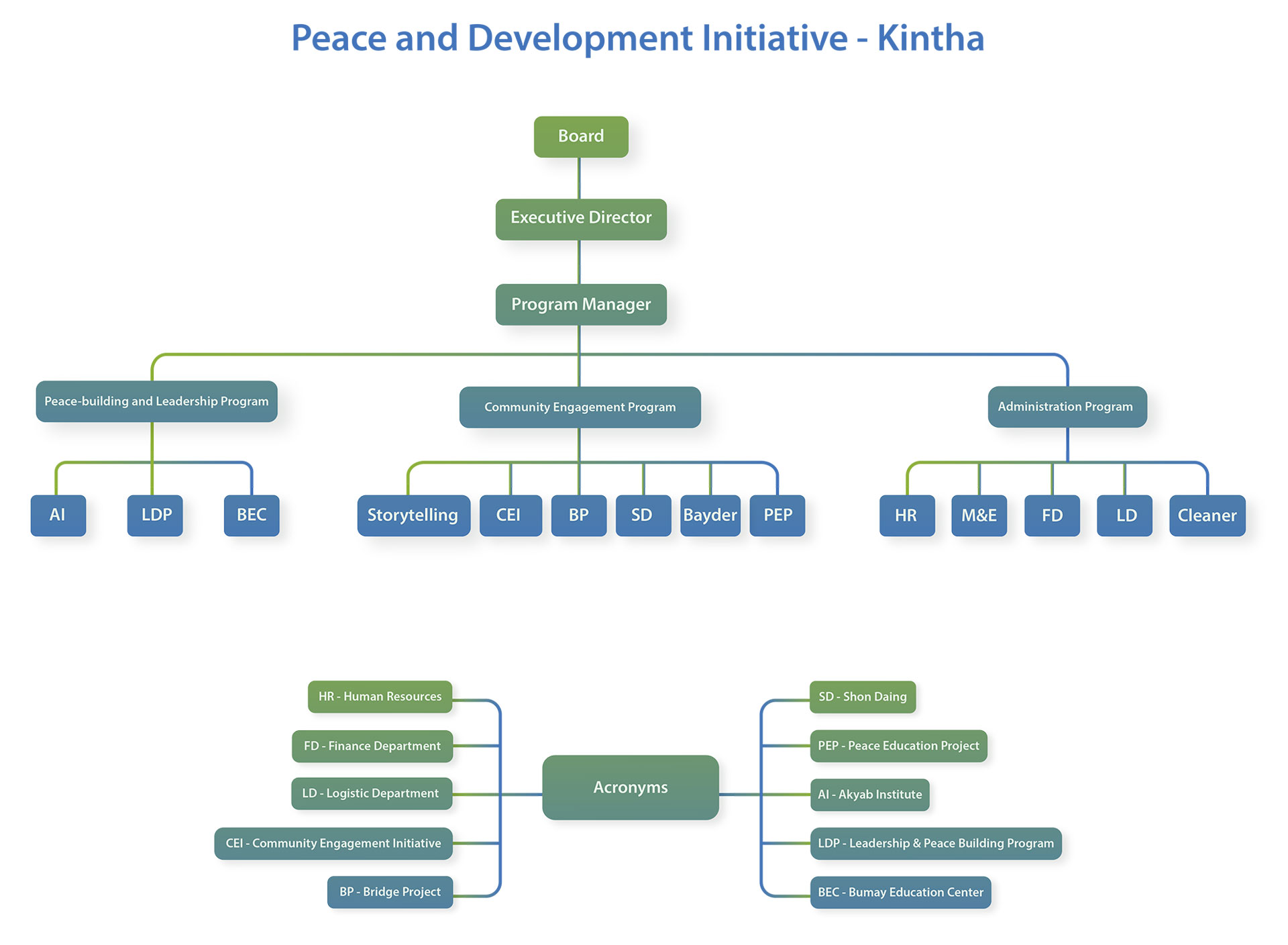
Organization Structure